
Adora Bright Pediatric Therapy Services – Richmond Hill
Hands-On Life Skills Studio
Practical Skills, Confidence, & Independence
The Hands-On Life Skills Studio at Adora Bright is a structured experiential learning program designed for children and early teens ages 4 to 16. The program supports the development of independence, problem-solving, executive functioning, and practical life skills through guided building, repair, and real-world project activities.
About the HANDS ON LIFE SKILLS STUDIO
The Hands-On Life Skills Studio at Adora Bright is a structured experiential learning program designed for children and early teens ages 4 to 16. The program supports the development of independence, problem-solving, executive functioning, and practical life skills through guided building, repair, and real-world project activities.
Located in Richmond Hill, this program is ideal for children and teens with autism, ADHD, developmental differences, or executive functioning challenges who benefit from hands-on learning, structured projects, and real-world skill development.
Through guided activities such as building projects, woodworking basics, troubleshooting challenges, and practical equipment maintenance, children develop confidence while learning how to plan, build, and complete meaningful tasks from start to finish.
Who This Program Is For
The Hands-On Life Skills Studio is designed for children and early teens ages 4–16 who benefit from practical, hands-on learning experiences.
Many children develop confidence, independence, and motivation when they can learn through building, creating, fixing, and solving real-world challenges rather than through traditional classroom instruction.
This program may be a good fit for children who:
- Enjoy building, fixing, or working with tools and materials
- Benefit from structured activities involving hands-on learning
- Are developing independence and everyday life skills
- Are building problem-solving and flexible thinking skills
- Benefit from practising teamwork and communication during projects
- Are developing executive functioning skills such as planning and organization
Activities are adapted to support a wide developmental range from pediatric learners to early teens up to age 16, with increasing levels of complexity and independence.
Skills Children Develop
Activities in the Hands-On Life Skills Studio are intentionally designed to support the development of practical life skills while strengthening cognitive, social, and motor abilities.
Children participating in this program practise skills related to:
- Problem solving and critical thinking
- Planning and completing multi-step tasks
- Executive functioning and organization
- Teamwork and cooperative building
- Communication and collaboration
- Fine motor coordination and tool use
- Responsibility and safety awareness
- Independence with real-world tasks
- Persistence and frustration tolerance
Core Learning Activities
Woodworking Basics, Tool Safety & Identification
Children are introduced to foundational woodworking skills through hands-on building projects while also learning the names, functions, and safe use of tools. Activities may include measuring, sanding, assembling, tool identification, practising protective equipment routines, following workshop safety demonstrations, and completing beginner woodworking projects such as birdhouses or simple build kits.
Through guided project-based learning, children develop confidence, independence, and the ability to use materials and tools responsibly while creating projects from start to finish. The program supports fine motor coordination, sequencing skills, task completion, and practical problem-solving, while also strengthening responsibility, rule-following, self-monitoring, and safe work habits.
Targets: fine motor development, sequencing, task completion, responsibility, rule-following, self-monitoring, safety awareness, independence, confidence, problem-solving skills
Build Projects & Bike Repair Studio
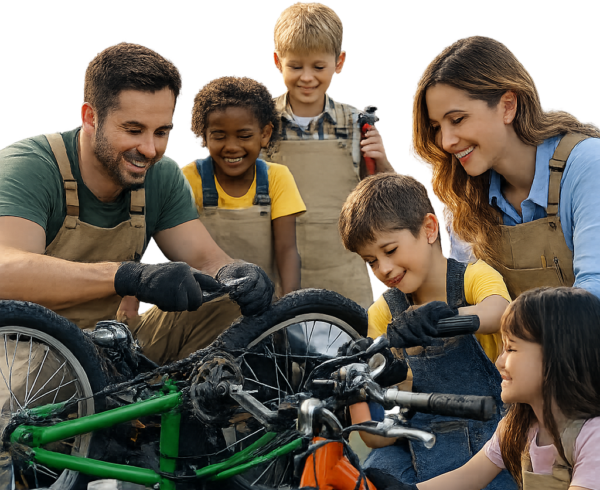
Children participate in hands-on build projects and bike repair activities through a structured plan → build → improve process, supporting project-based learning and functional skill development. Activities may include constructing simple projects, working collaboratively with peers, and learning bike maintenance skills such as using a tire pump, cleaning a chain, tightening components, and completing basic safety checks.
Projects may be completed independently or with a partner, encouraging teamwork, collaboration, and shared problem-solving. Through these real-world, hands-on experiences, children develop executive functioning skills such as planning, organization, and task completion, while also strengthening flexible thinking and follow-through.
The program promotes independence, responsibility, and confidence as children learn to build, repair, and care for materials and equipment from start to finish. By engaging in meaningful, practical activities, children develop strong problem-solving skills, functional life skills, and the ability to apply learning in real-world contexts.
Targets: executive functioning, teamwork, flexibility, planning skills, task completion, problem-solving, independence, real-world skills, follow-through, responsibility, functional life skills, confidence
Why Choose Us?

11+ Years of Clinical Excellence

OAP-Approved Service Provider

Regulated & Certified Clinicians
Frequently Asked Questions
Activities are adapted to meet the needs of younger children, school-aged children, and early teens.
- beginner woodworking projects
- guided build projects
- bike maintenance basics
- troubleshooting and fix-it challenges
- tool identification and safety routines