
OAP Core Clinical Autism Services– Richmond Hill
Occupational Therapy in Richmond Hill
Supporting Sensory Regulation, Motor Skills, and Independence
At Adora Bright Pediatric Therapy Services in Richmond Hill, Occupational Therapy (OT) helps children develop the physical, sensory, emotional, and executive functioning skills needed for everyday participation.
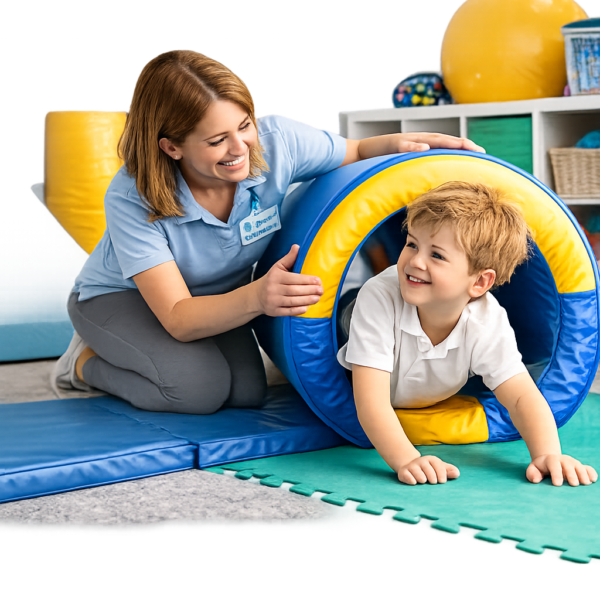
About Occupational Therapy at Adora Bright
At Adora Bright Pediatric Therapy Services in Richmond Hill, Occupational Therapy (OT) helps children develop the physical, sensory, emotional, and executive functioning skills needed for everyday participation. Occupational therapy supports children in building the skills required to participate successfully in home routines, school environments, play activities, and community settings.
Adora Bright is a registered Ontario Autism Program (OAP) approved service provider, meaning eligible families may be able to use OAP funding to access occupational therapy services as part of a comprehensive developmental support plan. Our clinic offers multidisciplinary care, where Occupational Therapists collaborate with Applied Behaviour Analysis (ABA) therapists and Speech-Language Pathologists (SLP) to support the whole child across developmental areas.
OT programs are individualized based on clinical assessments, developmental goals, and each child’s strengths, helping children build confidence, independence, and participation in everyday life.
Core Clinical Services
Multidisciplinary Pediatric Therapy
At Adora Bright, occupational therapy is delivered as part of a coordinated clinical model that supports children across developmental domains.
Our team integrates expertise across:
- Occupational Therapy (OT)
- Applied Behaviour Analysis (ABA)
- Speech-Language Pathology (SLP)
This multidisciplinary approach allows children to receive comprehensive support for sensory regulation, communication, motor development, and daily living skills.
Families across Richmond Hill, Aurora, Vaughan, and York Region choose Adora Bright for coordinated therapy that supports development across home, school, and community environments.
Some children experience challenges processing sensory information or regulating emotions in response to their environment. Occupational therapy helps children develop strategies that support calmness, attention, and participation in daily activities.
Therapy activities may focus on improving body awareness, sensory processing, and emotional regulation.
Programs may include:
- Sensory Integration therapy guided by the Sensory Profile 2 (SP-2)
- Zones of Regulation® emotional regulation program
- HeartMath® Resilient Heart program for stress and emotional management
- Primitive Reflex Integration techniques informed by the INPP approach
- Rhythmic movement and rocking activities
- Tactile exploration and sensory-based play
These approaches help children improve their ability to self-regulate, respond to sensory input, and remain engaged during learning and daily routines.
Motor coordination and visual-motor skills play an important role in classroom participation, play activities, and everyday independence.
Occupational therapy supports children in developing the physical skills needed to complete tasks such as writing, drawing, manipulating objects, and participating in movement activities.
Programs may include:
- Handwriting development using the Learning Without Tears® methodology
- Visual Motor Integration training
- Fine motor skill development for writing, drawing, and manipulation
- Foundational movement and coordination activities
- Oral motor development
These programs help children strengthen the motor foundations needed for school participation, play, and daily independence.
Executive functioning skills help children plan tasks, manage responsibilities, and organize activities.
Occupational therapy helps children develop strategies that support independent learning and daily routines.
Programs may include:
- Executive Function training using the CO-OP approach (Cognitive Orientation to Daily Occupational Performance)
- Social-emotional learning strategies
- Attention and focus skill development
- Structured problem-solving strategies
- Art-based therapeutic activities
These programs help children build planning, organization, problem-solving, and independence with everyday responsibilities.
Some children experience feeding challenges related to sensory sensitivities, oral-motor development, or food selectivity.
Occupational therapy can support children in building comfort, tolerance, and independence during mealtime routines.
Programs may include:
- Sequential Oral Sensory (SOS) Feeding Program
- Sensory-based feeding therapy
- Oral-motor development
- Tolerance of new textures and foods
- Structured mealtime routines
Feeding therapy helps children develop positive experiences around food while building independence during meals.
Some children benefit from additional therapeutic programs that support specific developmental needs.
Specialized services may include:
- Brain injury rehabilitation support
- Trauma-informed therapy approaches
- Mental health and emotional resilience programs
These programs help children build resilience, regulation strategies, and confidence in everyday participation.
SIGNS YOUR CHILD MAY BENEFIT FROM OCCUPATIONAL THERAPY
Families often consider occupational therapy if their child:
- Struggles with sensory sensitivities (sounds, textures, movement)
- Has difficulty regulating emotions or energy levels
- Experiences challenges with handwriting or fine motor skills
- Struggles with coordination or motor planning
- Has difficulty completing daily routines independently
- Experiences feeding or mealtime challenges
Occupational therapy helps children develop the skills needed to participate confidently in school, play, and everyday life.
BOOK AN OCCUPATIONAL THERAPY CONSULTATION
Families interested in occupational therapy services can begin with an intake consultation with our clinical team.
As an Ontario Autism Program (OAP) approved service provider, Adora Bright helps families understand how funding may be used to access therapy services.
During the consultation we will:
- Review your child’s developmental needs
- Discuss therapy goals and priorities
- Recommend appropriate services and programs
Why Choose Us?

11+ Years of Clinical Excellence

OAP-Approved Service Provider

Regulated & Certified Clinicians
Frequently Asked Questions
A pediatric occupational therapist (OT) helps children develop the skills they need to participate in everyday activities such as playing, learning, self-care, and social interaction.
At Adora Bright in Richmond Hill, occupational therapy supports areas such as:
- Sensory regulation
- Fine motor and handwriting skills
- Coordination and motor planning
- Emotional regulation
- Feeding and mealtime participation
- Independence with daily routines
Occupational therapists help children build confidence and independence in home, school, and community environments.
Early Years (2–6)
Focus on sensory development, play skills, feeding, and early motor skills.
School Age (6–12)
Focus on handwriting, coordination, executive functioning, and emotional regulation.
Teens (12+)
Focus on independence, executive functioning, life skills, and daily living routines. Programs are individualized based on each child’s developmental needs.
Some children experience differences in how their nervous system processes sensory information such as touch, movement, sound, or textures.
Children with sensory processing challenges may:
- Feel overwhelmed by noise or busy environments
- Avoid certain clothing or textures
- Seek excessive movement or pressure
- Have difficulty remaining calm or focused
Occupational therapy can help children develop strategies to regulate their sensory systems, improving participation in daily activities.
Yes. Occupational therapy frequently supports children who experience handwriting or fine motor challenges.
Therapists may help children develop:
- Pencil grasp and hand strength
- Visual-motor integration
- Letter formation and spacing
- Posture and coordination during writing
At Adora Bright, handwriting programs may incorporate the Learning Without Tears® approach to support classroom success.
Yes. Occupational therapy can help children develop strategies to understand and regulate emotions.
Therapists may use evidence-based approaches such as:
- Zones of Regulation®
- Sensory regulation strategies
- Body awareness activities
- Calming routines and coping strategies
These tools help children remain calm, focused, and ready to participate in learning environments.
Yes. Occupational therapy can support children who experience feeding challenges such as:
- Difficulty tolerating new foods
- Sensory sensitivities to textures or smells
- Limited food variety
- Difficulty using utensils
Feeding therapy may incorporate approaches such as the Sequential Oral Sensory (SOS) feeding program and sensory-based strategies to help children develop positive experiences around food.
Yes. At Adora Bright, occupational therapy is part of a multidisciplinary clinical model.
Occupational therapists collaborate with:
- ABA therapists
- Speech-Language Pathologists (SLP)
- Families and caregivers
This collaborative approach allows children to receive coordinated support across communication, behaviour, sensory regulation, and motor development.
Occupational therapy sessions typically last 45–60 minutes, depending on the program and the child’s therapy plan.
Sessions may include:
- Structured therapeutic activities
- Sensory-based exercises
- Motor skill development
- Functional practice of daily tasks
Programs may also include small group sessions designed to support skill generalization.