
Adora Bright Pediatric Therapy Services – Richmond Hill
Regulation & Readiness Lab
Self-Regulation, Attention, and School Participation.
The Regulation & Readiness Lab at Adora Bright is a structured developmental program designed for children and early teens ages 3 to 16 who need support developing self-regulation, attention, and participation skills required for success in school and social environments.
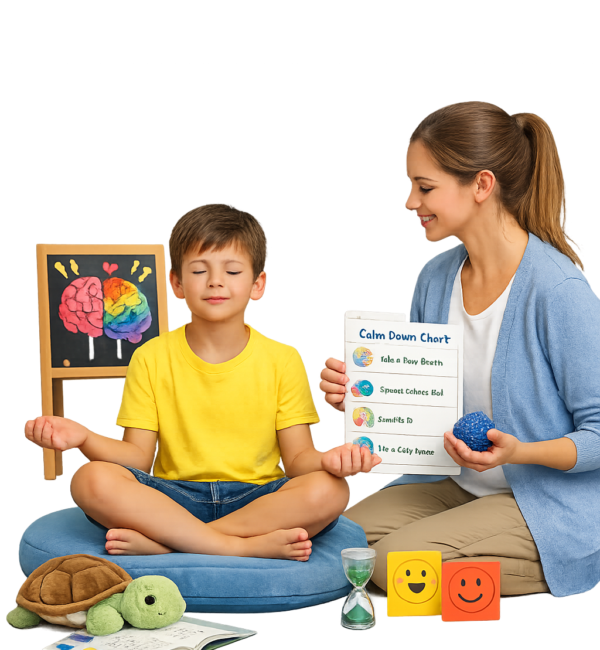
REGULATION & READINESS LAB
The Regulation & Readiness Lab at Adora Bright is a structured developmental program designed for children and early teens ages 3 to 16 who need support developing self-regulation, attention, and participation skills required for success in school and social environments. Children learn best when they feel calm, confident, and ready to participate. This program provides guided opportunities to practise emotional regulation, flexible thinking, and group participation through structured activities and supportive therapeutic coaching.
Located in Richmond Hill, the program supports children with autism, ADHD, sensory processing differences, and emotional regulation challenges who benefit from structured learning environments that teach practical regulation strategies. The program is designed to support both early learners preparing for preschool or kindergarten and school-age children developing advanced self-regulation and psychological flexibility skills.
Who This Program Is For
The Regulation & Readiness Lab is designed for children and early teens ages 3–16 who benefit from structured support with attention, emotional regulation, and participation in group environments.
EARLY LEARNERS
Early Learners may benefit if they:
- Are preparing for preschool or kindergarten environments
- Have difficulty sitting during group activities or circle time
- Need support with transitions, routines, or following instructions
- Are developing early social interaction and classroom participation skills
SCHOOL-AGE CHILDREN
School-age children may benefit if they:
- Experience challenges managing frustration or strong emotions
- Benefit from learning flexible thinking and coping strategies
- Struggle with regulation during social or school situations
- Are developing problem-solving and resilience skills
Many children with autism, ADHD, sensory sensitivities, or emotional regulation challenges benefit from structured programs that support self-regulation, attention, and psychological flexibility.
Skills Children Develop
Children participating in the Regulation & Readiness Lab practise skills that support both school participation and everyday independence.
EARLY LEARNERS
- Emotional regulation
- Listening and instruction following
- Participation in classroom routines
- Early social interaction skills
- Confidence in group learning environments
SCHOOL AGE CHILDREN
- Psychological flexibility
- Emotional awareness and regulation
- Flexible thinking and problem solving
- Communication during social challenges
- Resilience when facing difficult situations
These skills help children become more confident, flexible, and successful participants in school and social settings.
Core Learning Activities
Regulation Skills
EARLY LEARNERS
Children practise calming routines, movement breaks, and body awareness activities that
help them regulate energy levels and remain engaged during group activities.
These experiences help children learn when their bodies need movement, rest, or calming
strategies.
SCHOOL AGE CHILDREN
Older children practise identifying emotions, managing frustration, and developing
strategies for responding to challenging situations.
Activities support awareness of thoughts and feelings while helping children practise flexible
and goal-directed behaviour.
Targets: emotional regulation, body awareness, self-control
Group Participation & Listening
EARLY LEARNERS
Children practise early classroom participation skills such as circle time routines, listening to
instructions, waiting for turns, and responding to teacher prompts.
SCHOOL AGE CHILDREN
Older children build on these skills by practising active listening, respectful discussion, and
collaborative problem solving during group activities.
Targets: listening skills, instruction following, group participation
Transitions & Flexible Thinking
EARLY LEARNERS
Children practise transitioning between activities using visual supports, predictable routines,
and structured schedules.
These routines help children move between tasks while remaining regulated and engaged
SCHOOL AGE CHILDREN
Older children focus on flexible thinking and problem solving when situations change.
Activities help children practise adjusting plans, managing unexpected challenges, and
responding to frustration in constructive ways.
Targets: flexibility, transition tolerance, problem solving
Social Interaction
EARLY LEARNERS
Children practise early social skills such as sharing materials, turn-taking, and cooperative
play through structured games and activities.
SCHOOL AGE CHILDREN
Older children practise perspective-taking, communication during problem solving, and
managing social challenges with peers.
Targets: peer interaction, communication, cooperative play
Why Choose Us?

11+ Years of Clinical Excellence

OAP-Approved Service Provider

Regulated & Certified Clinicians
Frequently Asked Questions
- movement and body regulation activities
- structured group routines
- cooperative games and peer interaction activities
- guided discussions about emotions and problem solvingg
- flexible thinking and coping strategy practicee